
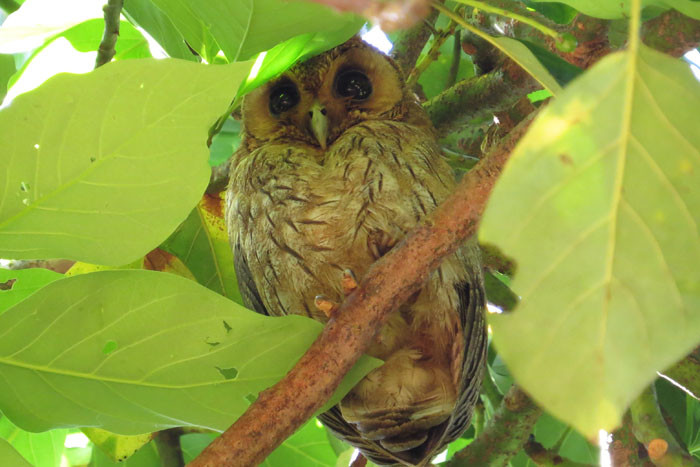
 Usually seen by night, the Jamaican Owl can sometimes be found on a day roost. Photo: Rich Hoyer
 -
Usually seen by night, the Jamaican Owl can sometimes be found on a day roost. Photo: Rich Hoyer
-
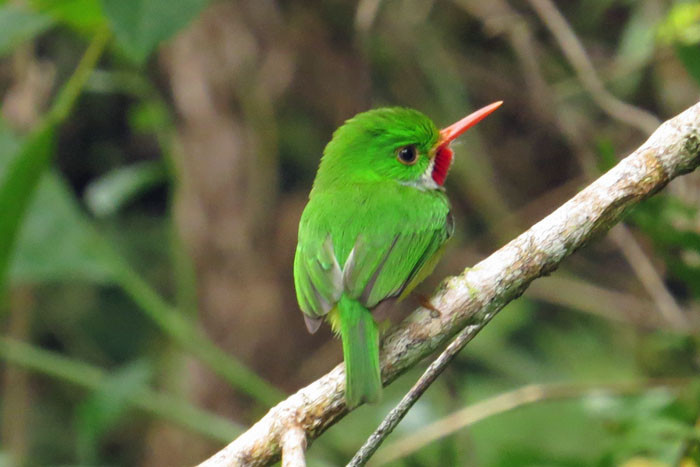
One fifth of the world's diversity of todies occurs here, the appropriately named Jamaican Tody. Photo: Rich Hoyer
-
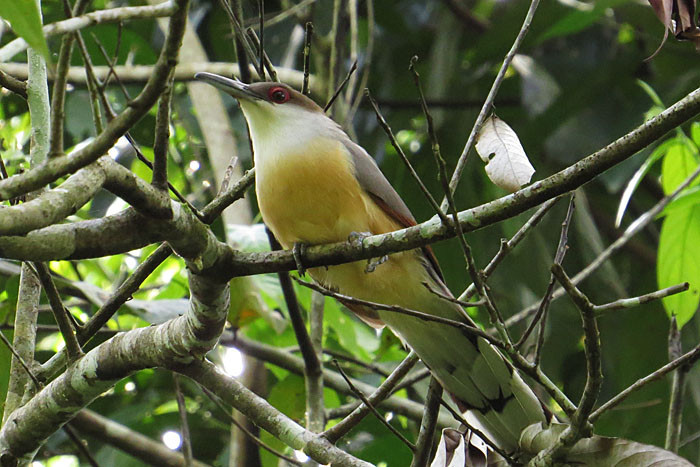
One of the scarcer birds on our itinerary is the attractive Jamaican Lizard-Cuckoo. Photo: Rich Hoyer
-
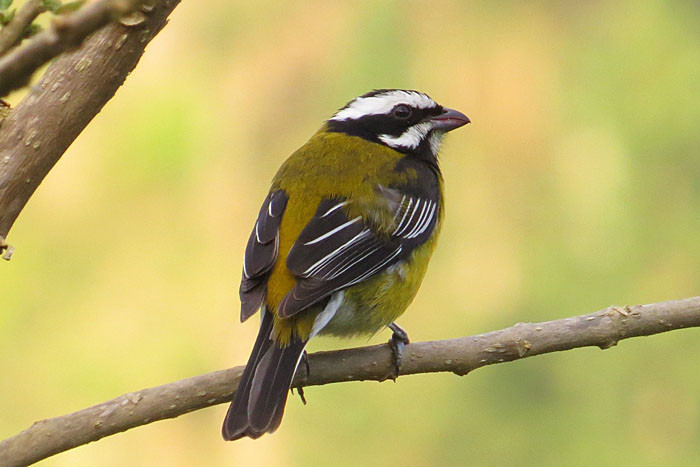
Jamaican Spindalis is the largest and gaudiest of this distinctive Caribbean family of tanager relatives. Photo: Rich Hoyer
-
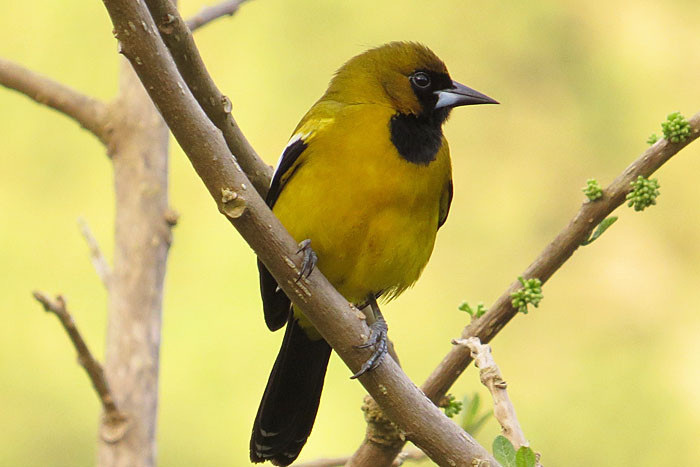
The happy songs of Jamaican Oriole, known as Auntie Katie by the locals, is heard every day. Photo: Rich Hoyer
-
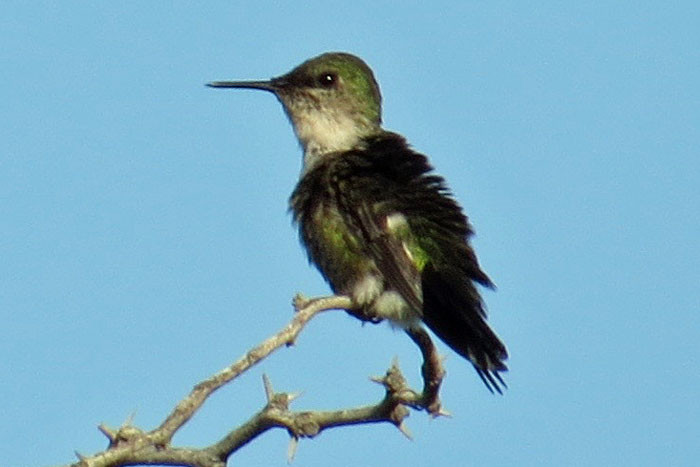
Vervain Hummingbird just misses being the world's smallest bird. Photo: Rich Hoyer
-
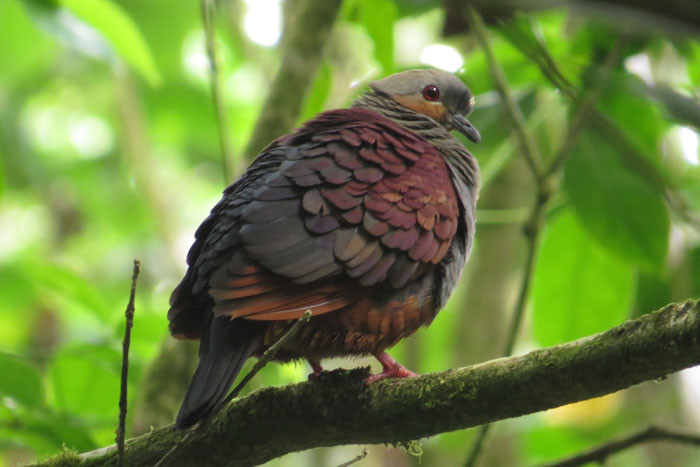
Appreciated for its colors, behavior, and elusiveness is the endemic Crested Quail-Dove. Photo: Rich Hoyer
With at least 27 endemic bird species as well as a host of Antillean and neotropical specialties, Jamaica offers some of the most exciting birdwatching in the West Indies. It is the only one of the Greater Antillean islands where one has a very good chance of seeing every endemic in less than a week.
A treasured part of our short tour is the opportunity to stay at delightful Marshall’s Pen, the 200-year-old working ranch, nature reserve, and home of biologist and conservationist Ann Sutton, who recently coauthored A Photographic Guide to the Birds of Jamaica. In these idyllic surroundings, we expect to see many of the island’s endemic birds as well as abundant butterflies, anole lizards, and treefrogs. We’ll also visit the desert-like southern peninsula and spend three full days exploring the more lush and mountainous eastern end of the island, with ample opportunity not only to see every endemic species, but to get to know most of them well through multiple observations at a relaxed pace.
Delicious local foods (such as ackee, callaloo, bammy, and the famous jerk recipes) and a look at Jamaica’s fascinating history and culture round out a very special experience.
Day 1: The trip begins this evening at our hotel in Montego Bay, Jamaica.
Day 2: The birds right around our hotel might include the endemic subspecies of Vervain Hummingbird and Bananaquit and the introduced Saffron Finch, but more exciting birding awaits us, so after breakfast we’ll work our way eastward along the northern coast, making stops before lunch to check roadside ponds and mangroves for migrants and resident water birds, among which may be Clapper Rail and “Golden” Yellow Warbler. All along the roadsides we’ll see the endemic subspecies of Loggerhead Kingbird, as well as any Gray Kingbirds that may have just recently arrived from their South American wintering grounds.
The Red-billed form (or species) of the Streamertail is on our first night’s hotel grounds, but as we work our way eastward to our lodging in Port Antonio we enter the range of the decidedly different Black-billed Streamertail. These and Jamaican Mango visit the feeders at our hotel, while White-chinned Thrush, Jamaican Euphonia, Jamaican Spindalis, and Jamaican Woodpecker could be active when we arrive. Weather permitting, we’ll also make an attempt for Jamaican Owl on our hotel grounds. Night in San San.
Day 3: Today we’ll bird at a slow pace along Ecclesdown Road in the Drivers River Valley. At the base of the John Crow Mountains, this is the wettest forest on the island—and the single most endemic-rich spot in the entire Caribbean. We’ll concentrate our search images on the difficult Crested Quail-Dove and the scarce Jamaican Blackbird above all else, though the birding, in general, is great fun. Crested Quail-Doves may be found walking on the roads at dawn (and sometimes later in the day as well), and their haunting songs should be heard from the dense woods, a sound that has earned them the local name “mountain witch.” The blackbird, in its own genus Nesopsar, doesn’t appear to be closely related to any other blackbird. Pairs sing short duets, males perform display flights in the canopy, and they search bromeliad and vine tangles more like a foliage-gleaner than any icterid. The blackbirds require mature wet forest, a habitat much reduced in Jamaica, and this is one of the best places for them. Blue Mountain Vireo is also found here, sometimes appearing quietly and unexpectedly only a few feet away. The cheeky Rufous-tailed Flycatcher, noisy Jamaican Woodpecker, and delightful Jamaican Tody are more examples of the fabulous birds we should see here. By lunchtime, we’re likely to have well over half of the island’s endemics under our belt. Night in San San.
Day 4: We’ll have this morning to return to the Ecclesdown Road with a stop to look for White-tailed Tropicbirds. After lunch, we’ll make the drive into the Port Royal Mountains to our hotel, perched on a mountain slope overlooking coffee fields at the junction with the Blue Mountains. Night in Silver Hill Gap.
Day 5: We’ll spend all morning high in the Port Royal Mountains, where as much as 100 inches of rain a year supports luxurious and fascinating vegetation—highland trees such as the Blue Mahoe and a heavy growth of mosses, lichens, endemic tree ferns, and bromeliads. The often elusive Crested Quail-Dove and Jamaican Blackbird are also possible here, and this will likely be our only chance at the lovely Rufous-throated Solitaire, an endemic subspecies that should probably be considered specifically distinct from the Hispaniolan and Lesser Antillean forms. We may also see Greater Antillean Elaenia, and Arrowhead Warbler seems to be most common in these mountains. Orangequits can be quite abundant in this area, and Chestnut-bellied Cuckoo, the “old man bird,” is often on our hotel grounds. After lunch in the mountains, we’ll work our way to our home for the next three nights, Marshall’s Pen on the outskirts of Mandeville.
Days 6-7: We’ll spend at least one full morning at Marshall’s Pen, where the birding experience starts even before we rise, with the glorious song of the endemic White-eyed Thrush. We will have likely seen all but one or two of the endemics by now, but maybe it will be this morning when we finally have our best views of the scarcer ones, such as White-eyed Thrush or Jamaican Lizard-Cuckoo.
On one day we’ll depart just after lunch for the radically different habitats of Portland Ridge. Here the arid acacia scrub resembles eastern Africa more than it does other parts of the island; it is home to the endemic subspecies of Bahama Mockingbird, while Vervain Hummingbird and Stolid Flycatcher are especially common here. Searching for waterbirds in the mangrove lagoons and for northern migrants in the surrounding scrub will add to the day’s interest.
On another day we’ll rise early and drive into the Cockpit Country, home to several birds not always easily seen elsewhere on the island. We’ll arrive in time to see the mist lift from the “egg-box” hills that give the area its name, and more importantly, to view the early morning flights of Yellow-billed and Black-billed Parrots; with luck, we’ll also see them perched. The rugged karst formations here have been an effective deterrent to forest clearing, making the Cockpit Country some of the most pristine habitat in Jamaica, full of endemic plants, butterflies, and other creatures. We’ll look especially for Plain Pigeon, Rufous-tailed Flycatcher, and Jamaican Crow. We’ll return to Marshall’s Pen in mid-afternoon.
One of the best parts of the day at Marshall’s Pen is the evening meal on the verandah, the table full of delicious Jamaican food and the diners surrounded by the sounds of the Jamaican night: the voices of Jamaican Owl, Northern Potoo, and myriad amphibians. Nights at Marshall’s Pen.
Day 8: We’ll conclude with our return to Montego Bay, stopping at several birding hotspots to scan ponds, lakes, and marshes for additional species. If we’re lucky, we might see Yellow-breasted Crake, Spotted Rail, West Indian Whistling-Duck, Masked Duck, or perhaps an American Crocodile waiting expectantly under a heron roost. Night in Montego Bay.
Day 9: The tour concludes this morning in Montego Bay.
Updated: 22 April 2020
Prices
- 2025 Price Not Yet Available
- (2024 Tour Price$4,590)
Notes

Questions? Tour Manager: Greg Greene. Call 1-866-547-9868 (US or Canada) or (01) 520-320-9868 or click here to email.
* Tour invoices paid by check carry a 4% discount. Details here.
This tour is limited to six participants with one leader and 12 with two leaders.